
Bedroom Guides
How Bedroom Air Quality and Temperature Affect Your Sleep
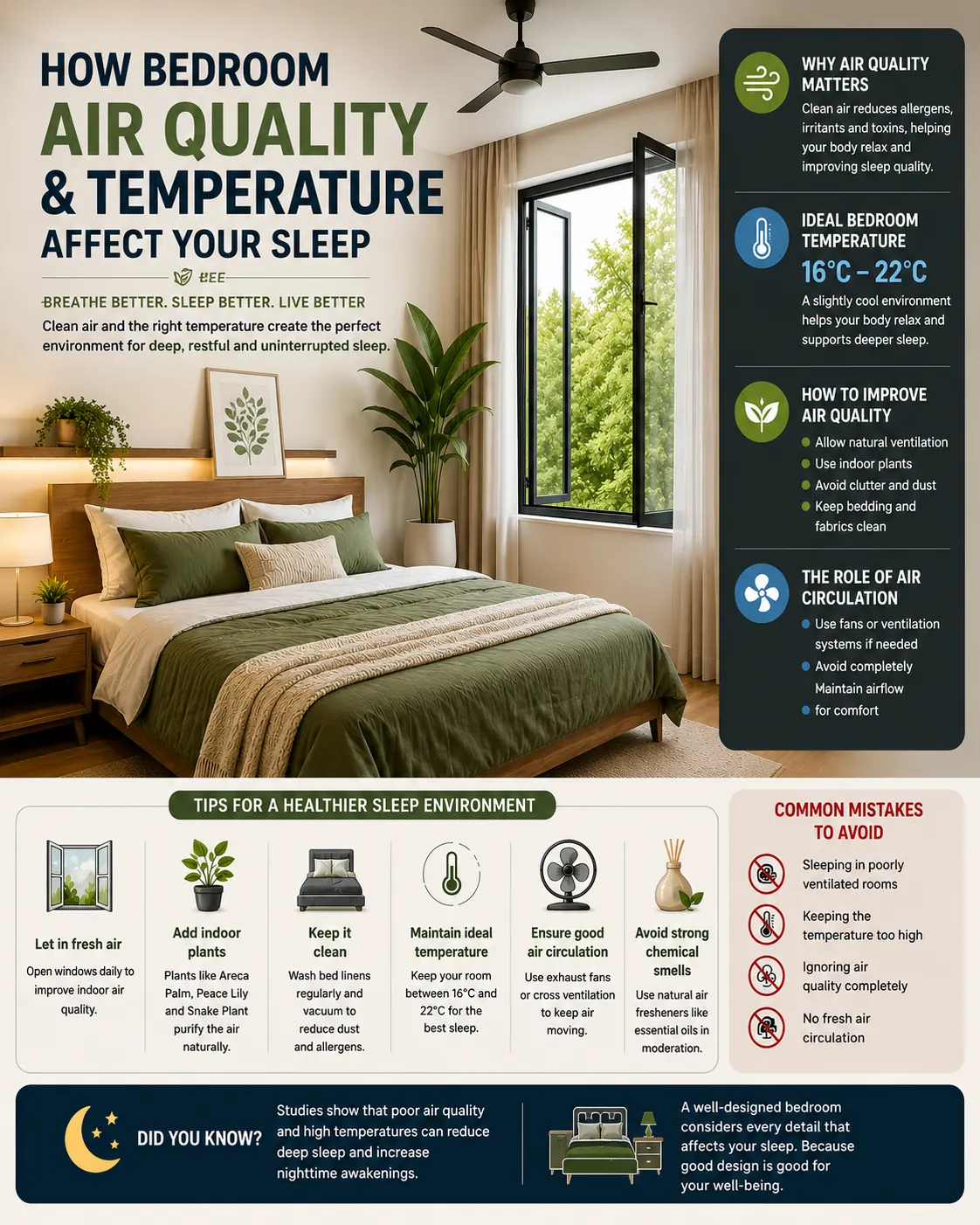
Most people troubleshoot bad sleep by changing their mattress, their pillow, or their bedtime. Few think about the air they are breathing for eight hours a night. Bedroom temperature and air quality affect how easily you fall asleep, how often you wake up, and how rested you feel in the morning, often more than the furniture in the room.
The Ideal Bedroom Temperature for Sleep
Your body temperature naturally drops as you fall asleep, and a room that is too warm interferes with that drop. Most sleep research points to a range of around 18 to 22 degrees Celsius as ideal for adult sleep, with slightly cooler favored over slightly warmer. A room that runs hot leads to restless, shallow sleep even if you do not consciously wake up from it.
If your bedroom tends to run warm, especially in a top-floor apartment or a west-facing room, that heat buildup is often the real reason behind a poor night's sleep, not the mattress.
Why Air Quality Matters as Much as Temperature
A closed bedroom accumulates carbon dioxide, dust, and humidity overnight. Poor air quality is linked to lighter, more fragmented sleep and grogginess the next morning, even when total sleep time looks normal. Humidity plays a role too: air that is too dry irritates your throat and sinuses, while air that is too humid makes the room feel warmer than the thermostat suggests and encourages dust mites.
Bedrooms with wall-to-wall carpeting, heavy curtains, or limited airflow tend to trap more dust and allergens, which can quietly affect sleep quality for anyone sensitive to them.
Simple Ways to Improve Bedroom Air and Temperature
- Leave a window cracked or ventilate the room for a few minutes before bed, even in winter, to clear out stale air.
- Keep the room a few degrees cooler than the rest of the house if possible; a fan or cross-ventilation works even without air conditioning.
- Wash bedding and curtains regularly to cut down on dust and allergens that build up over time.
- Avoid heavy, moisture-trapping fabrics in rooms that already run humid.
- If you use an air conditioner overnight, set it a degree or two warmer than feels ideal when you first get into bed, since the room will continue to cool as you sleep.
Getting the Basics Right First
Furniture, mattress quality, and layout all matter for a good bedroom, but they work best in a room that already has the temperature and air quality right. Before investing in anything else, spend a week paying attention to how warm or stuffy your room actually gets at night. It is often the cheapest fix with the biggest impact on sleep quality.
Back to Bedroom Guides