
Bedroom Guides
Best Bedroom Lighting for Better Sleep
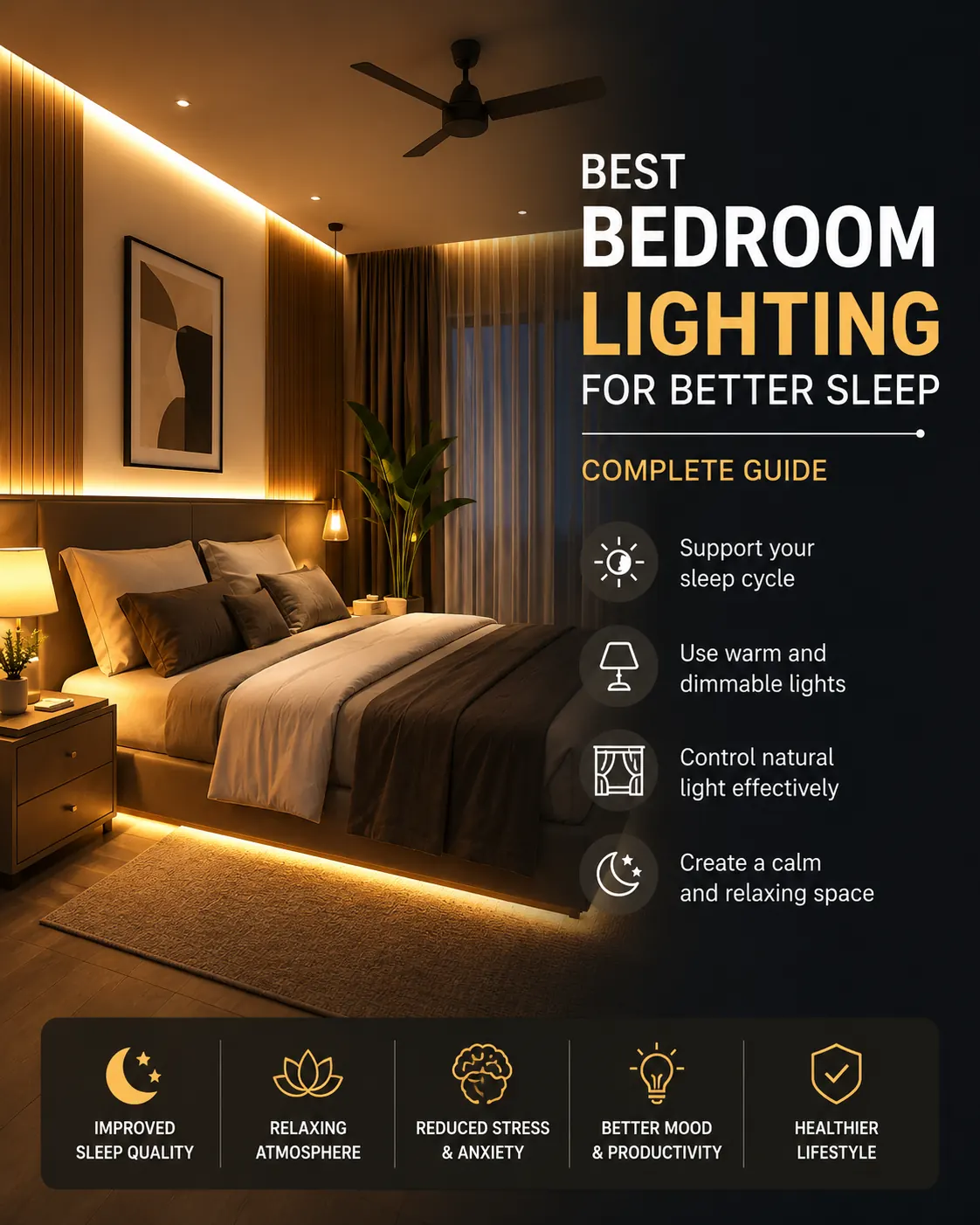
Lighting affects your body's sleep signals more directly than almost anything else in the room. A single overhead bulb left on until you switch it off at the door is one of the most common reasons a bedroom feels harder to relax in than it should, even with good furniture and a comfortable mattress.
Why a Single Overhead Light Is Rarely Enough
One bright source at the center of the ceiling forces an all-or-nothing choice: fully lit or fully dark, with nothing in between. That works for getting dressed in the morning, but it works against winding down at night. A bedroom benefits from layered lighting, several softer sources you can mix and match depending on the time of day, rather than one switch controlling everything.
The Three Layers Worth Having
- Ambient light: a general source, like an overhead fixture or ceiling light, for full brightness when you need it.
- Task light: a reading lamp or bedside light focused on where you actually need to see, like reading in bed or the dressing table.
- Accent light: softer, indirect lighting such as a warm wall light or LED strip that creates a calm mood without flooding the whole room.
Having all three, even simply, gives you control over how the room feels at different points in the evening instead of one fixed setting.
Warm Light Matters More Than Brightness
Color temperature, measured in kelvins, has a bigger effect on sleep readiness than most people expect. Cool, bluish light (above around 4000K) mimics daylight and keeps your body alert, which is useful in the morning but counterproductive at night. Warm light (around 2700K to 3000K) mimics candlelight and sunset tones, and is far better suited to the hour before bed.
If your bedroom currently runs on cool white bulbs, switching just the evening lamps to warm-toned bulbs is a small, low-cost change with a noticeable effect on how easy it is to wind down.
Practical Ways to Improve Bedroom Lighting
- Add a bedside lamp on each side of the bed so lighting is not dependent on the main switch by the door.
- Use warm-toned bulbs (2700K to 3000K) for any light used in the evening.
- Consider a dimmer switch or a lamp with adjustable brightness for gradual transitions rather than one fixed level.
- Keep bright, cool-toned light for closets or dressing areas where task visibility matters more than mood.
- Block out external light sources, like streetlights, with proper curtains or blinds, since ambient light quality only helps if it is not competing with light leaking in from outside.