
Bedroom Guides
The Complete Bedroom Design Guide
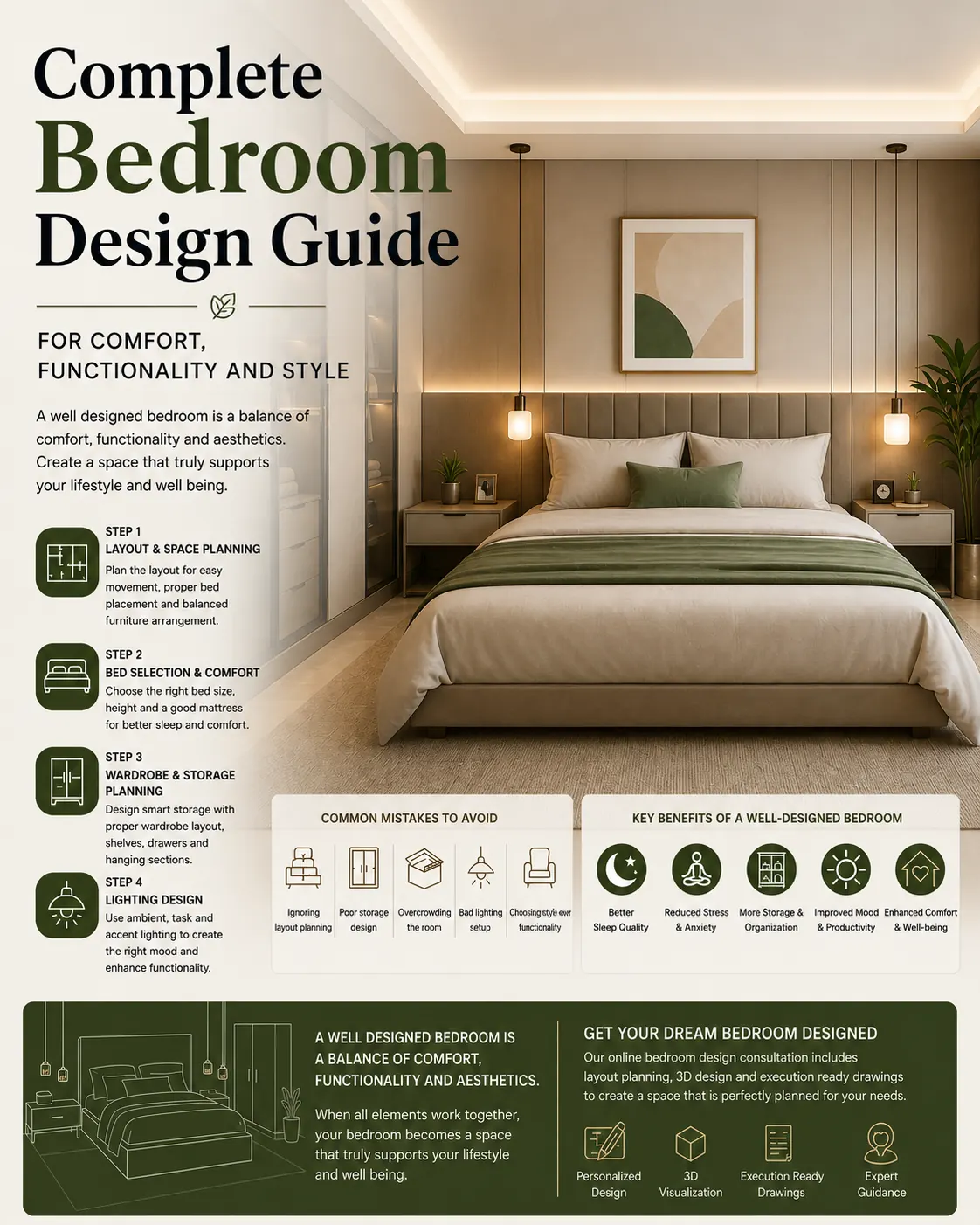
A good bedroom balances three things: comfort, functionality, and style, roughly in that order. It is easy to start with style, picking colors and furniture that look good in photos, and end up with a room that is harder to actually live in. Working through the basics in the right order makes the difference between a bedroom that photographs well and one that works well.
Start With Comfort
Comfort covers the things you feel physically: temperature, mattress quality, light control, and noise. None of these show up in a photo, but all of them decide how well you actually sleep. Before choosing furniture or a color scheme, make sure the room is at a comfortable temperature, the mattress supports you properly, curtains or blinds block outside light, and the space is reasonably quiet. Skipping this step means even a beautifully designed room will feel off in ways that are hard to pin down.
Then Solve for Functionality
Functionality is about how well the room supports what you actually do in it: sleeping, dressing, storing clothes, and sometimes working or relaxing. This is where furniture choice and layout matter most. A wardrobe and storage setup that matches what you own, a bed sized correctly for the room, and enough clear floor space to move comfortably are the foundation. A well-functioning bedroom does not need you to squeeze past furniture or dig through drawers to find what you need.
Think through your daily routine in the room, getting up, getting dressed, winding down at night, and check whether the current layout supports or fights against it.
Style Comes Last, and That's Fine
Once comfort and function are handled, style is the layer that ties everything together: color palette, textures, decor, and finishing details. This is also the most flexible layer. It's far easier and cheaper to change a color scheme or swap decor later than it is to fix a layout that never worked, so it makes sense to get the earlier layers right first.
A Practical Order to Work Through
- Check the room's temperature, light control, and noise levels, and fix any obvious issues first.
- Choose a bed size that fits the room with enough clearance to walk around comfortably.
- Plan storage (wardrobe, bedside tables, dressing table) around what you actually own, not a generic setup.
- Decide on a color palette and lighting plan that supports winding down in the evening.
- Add decor and finishing touches last, once the functional layout is settled.
A bedroom that gets these fundamentals right rarely needs a full redesign later. It just needs small adjustments as your needs change, which is a far easier position to be in than starting over.
Back to Bedroom Guides